有时候我们会碰到这样的需求,需要执行对象的某个方法,或是需要对对象的某个字段赋值,而方法名或是字段名在编码代码时并不能确定,需要通过参数传递字符串的形式输入。举个具体的例子:当我们需要实现一个通用的DBM框架时,可能需要对数据对象的字段赋值,但我们无法预知用到这个框架的数据对象都有些什么字段,换言之,我们在写框架的时候需要通过某种机制访问未知的属性。
这个机制被称为反射(反过来让对象告诉我们他是什么),或是自省(让对象自己告诉我们他是什么),用于实现在运行时获取未知对象的信息。
一. 代码示例
a.py1
2
| def a(a):
return [1,2,3,4]
|
b.py
rest.py1
2
| from a import *
from b import *
|
views.py1
2
3
4
5
6
7
8
9
10
11
12
13
14
15
16
17
18
19
20
21
22
23
| import json
import traceback
import rest
def resthandler(body):
retdata = {}
retdata['error'] = None;
retdata['result'] = None;
try:
c = json.loads(body)
method = getattr(rest,c['method'])
if c['params']:
ret = method(**c['params'])
else:
ret = method()
retdata['result'] = ret
except Exception,e:
if 1:
retdata['error'] = traceback.format_exc()
print traceback.format_exc()
else:
retdata['error'] = 'error'
return json.dumps(retdata)
|
main.py1
2
3
4
5
6
7
8
9
10
11
12
13
14
15
16
17
18
|
import os
import json
from flask import Flask, render_template, request
from views import resthandler
app = Flask(__name__)
@app.route('/')
def index():
return render_template("index.html")
@app.route('/rest',methods=['POST'])
def upload():
return resthandler(request.data)
if __name__ == '__main__':
app.run(debug=True, port=81)
|
二. 结果演示
1. 未知函数
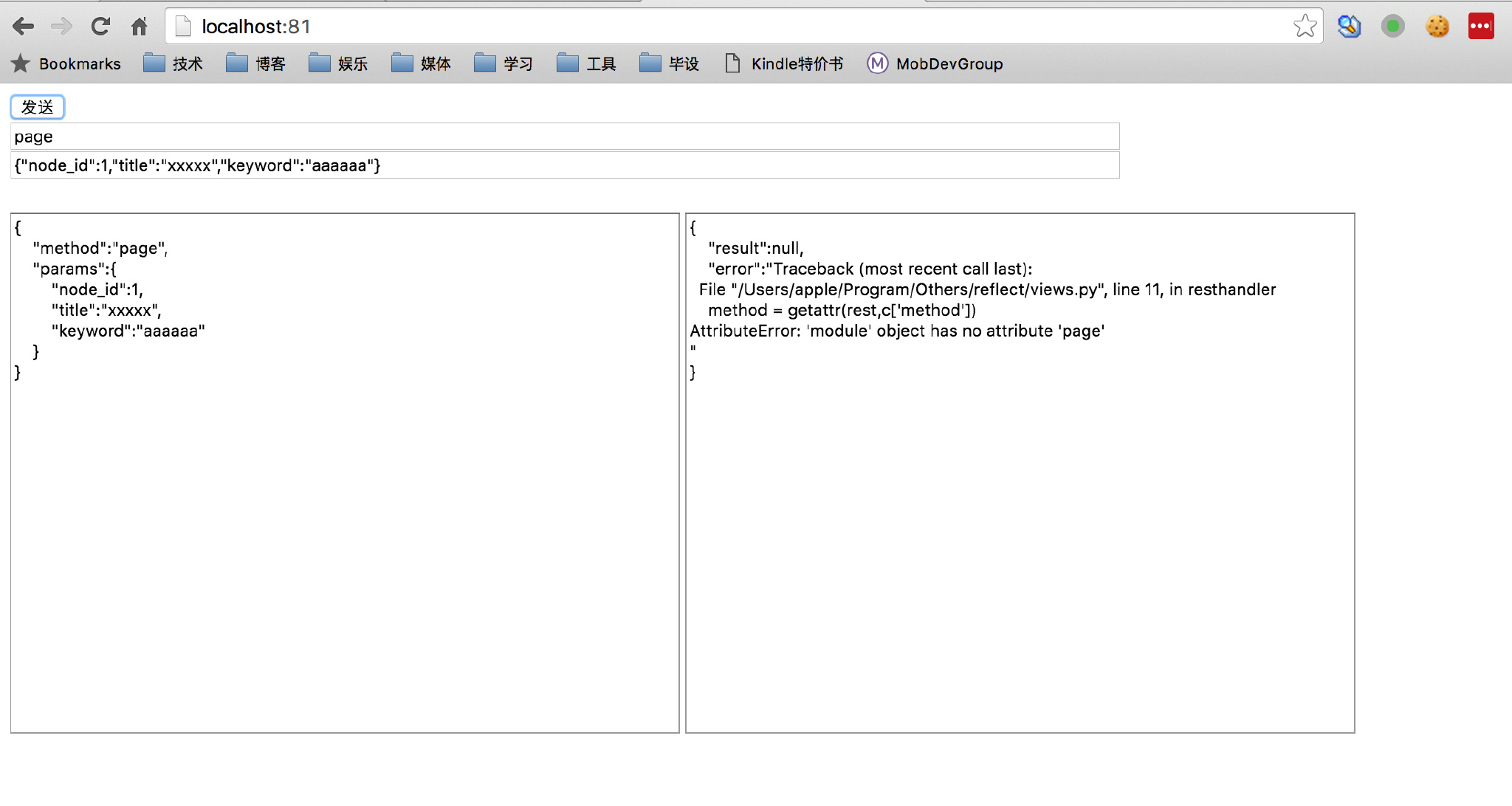
当传入的方法名为 page, 参数为 {"node_id":1, "title":"xxxxx", "keyword":"aaaaaa"}时, 返回错误。
2. 已知函数, 并带有参数
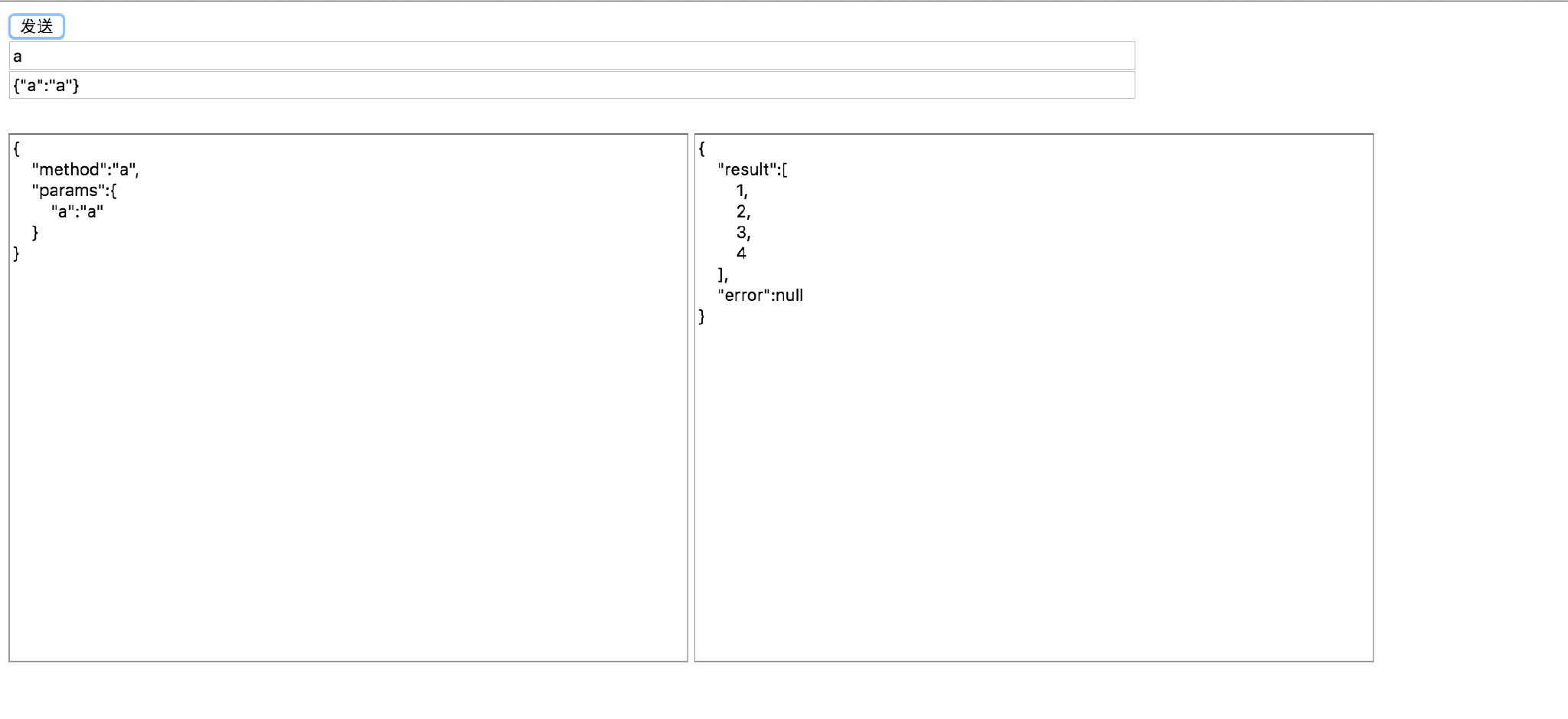
当传入的方法名为 a, 参数为{"a":"a"}, 结果返回了之前a函数中的return值([1,2,3,4])。
3. 已知函数, 不带参数
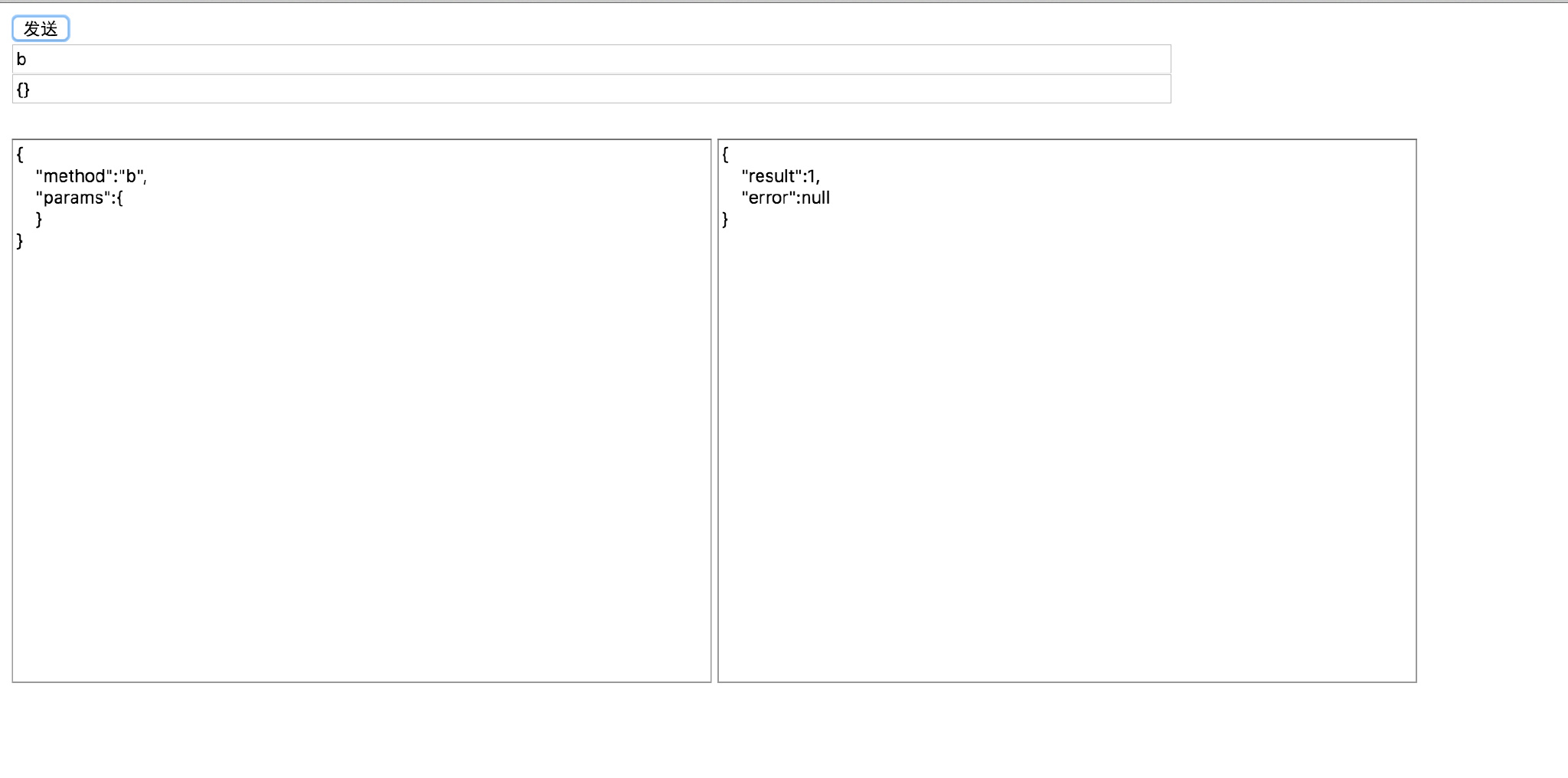
当传入的方法名为 b, 参数为{}(空), 结果返回了之前b函数中的return值1。